The Open Channel
Why SolesFantasy leaves its channels half-open—and how each position changes who sets the pace.
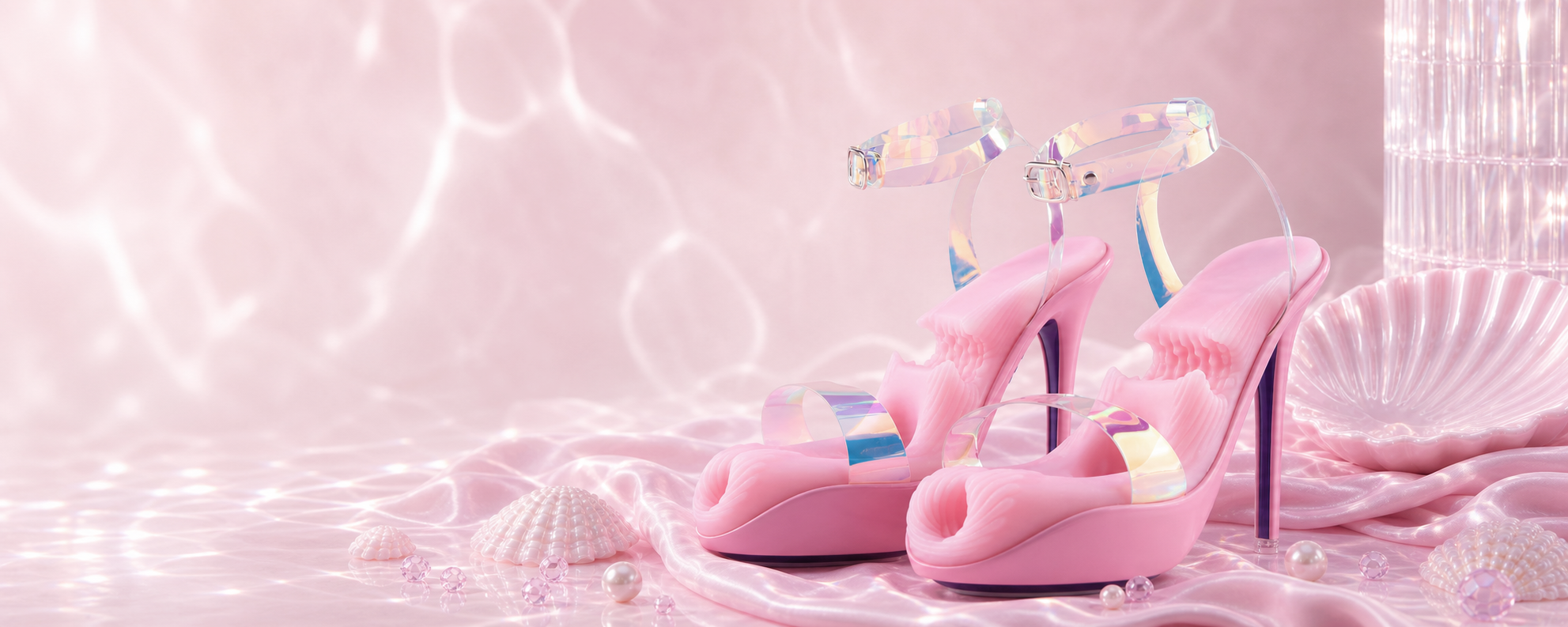
SolesFantasy is a wearable high-heel object built around a soft insole of platinum-cured silicone.
At first glance, some viewers describe SolesFantasy as a high-heel-shaped pleasure sleeve. The comparison is easy to understand, but it reduces the design to a familiar category. SolesFantasy began somewhere else: with two people, and with the changing space between them.
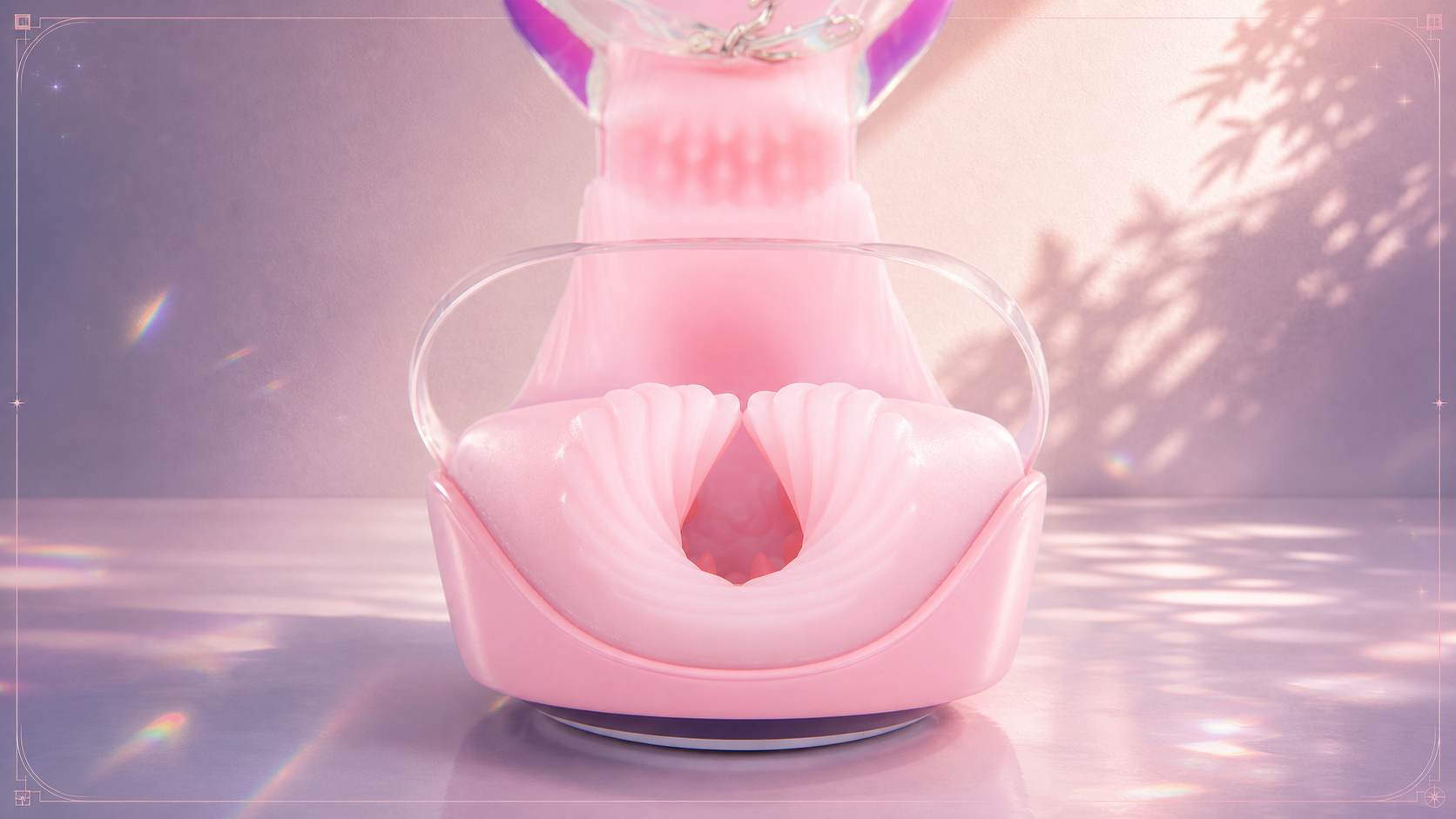
Its two semi-open channels sit beneath the forefoot and the arch. They are not two versions of the same opening. Each creates a different moment of contact—one that lets the wearer lead, and one that allows control to shift back.
Why leave the channel half-open?
Each channel cradles from below while leaving the top open to the wearer’s sole. Instead of enclosing the point of contact, the design brings two sensations together: support underneath and touch from above.
That overlap is what changes the experience. It is shaped not only by material and form, but also by the wearer’s movement, the partner’s response, and the rhythm they find together.
A closed sleeve can feel self-contained. A semi-open channel leaves one side of the interaction visible and responsive. The wearer completes it through movement, pressure, and pause. It feels less like operating a device and more like entering a shared gesture.
The sole is usually private—soft, sensitive, and hidden inside a shoe. Because it is rarely on display, it carries a particular charge in the imagination.
Desire need not be justified or made respectable. An object, a posture, or one small part of the body can carry emotion and fantasy. What matters is how that sensitivity is shared—with consent, trust, attention to boundaries, and respect for each person’s response.
Why one at the forefoot, and one at the arch?
Because the two positions allow the balance of control to shift.
A role does not always need a costume or a complicated scene. It can begin with a stance, a look, or one quiet sentence:
The forefoot is responsive and easy to move with intention. At the front channel, the wearer can set the pace through small, legible changes—lighter or firmer, quicker or slower, continuing or stopping.
The arch is different: less accustomed to contact, more likely to tense or pull away. When attention moves there, hesitation becomes part of the exchange. The wearer’s response can slow the moment, redirect it, or hand the initiative back to their partner.
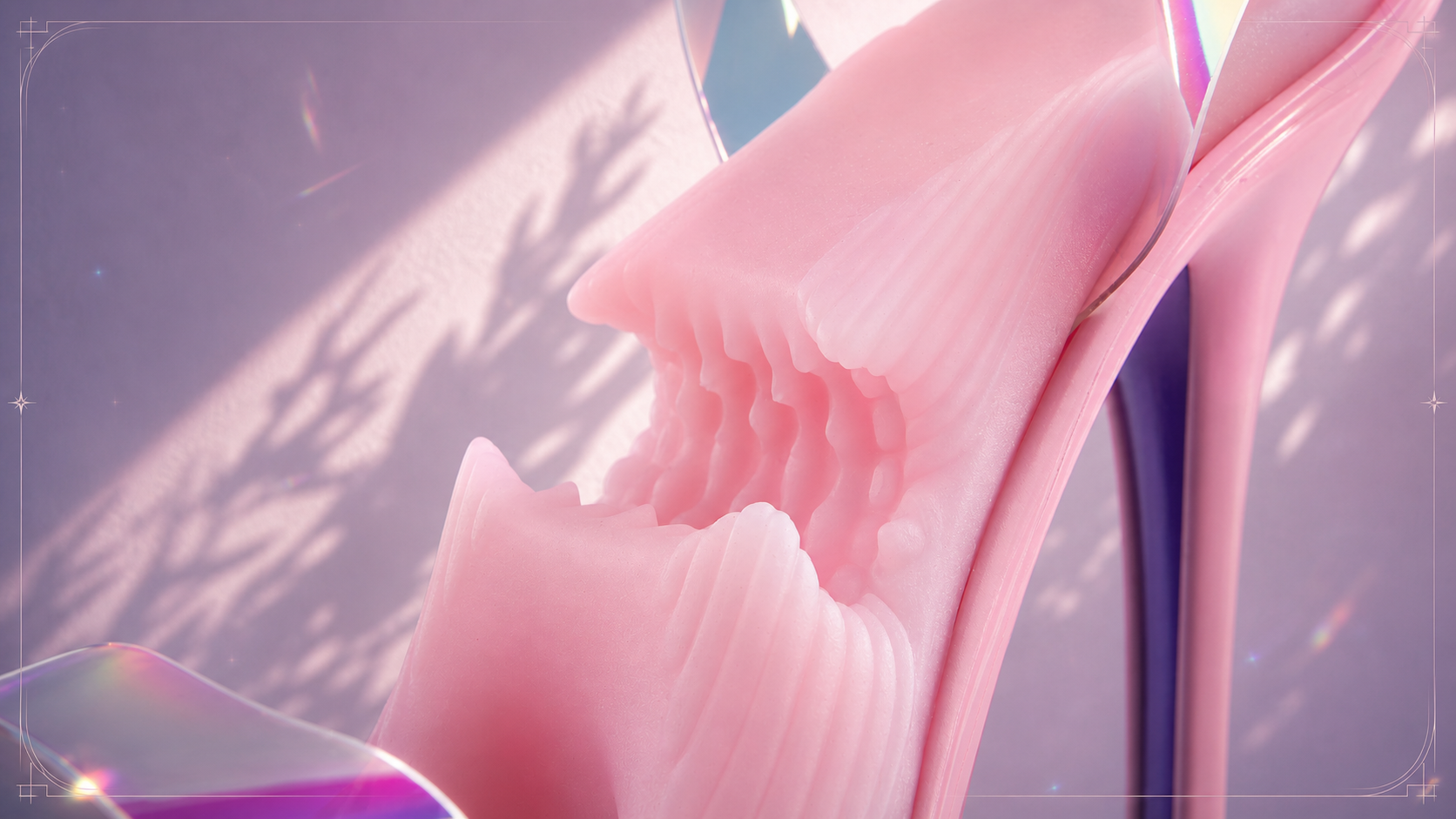
The two channels do not simply repeat the same gesture in two places. Each creates a different dynamic: who invites, who follows, who holds the pace, and who gets to change it.
Set the rhythm
At the forefoot, small movements read clearly. The wearer can guide the pace—and decide whether it continues.
Shift the rhythm
At the arch, tension or hesitation can redirect the exchange and return the initiative to the partner.
Let roles move
Neither role is fixed. The design makes room for control to move between two people.
This is SolesFantasy.
It is easy to notice the silhouette first. CatQ is more interested in what the form makes possible: a quiet exchange of movement, attention, and control between two people.
A silhouette can be copied; the thinking behind it is harder to reproduce. The semi-open construction, the two positions, and the movement between them were designed to leave the fantasy open, not explain every part of it.
SolesFantasy is more than a sculptural object. It can be a signal, a shared ritual, or simply a space where fantasy remains open to interpretation.
Fantasy, designed to be felt.
Enter carefully. Leave room for the other person. Let the rhythm change.